Easily Preserve Eggs with Water Glassing
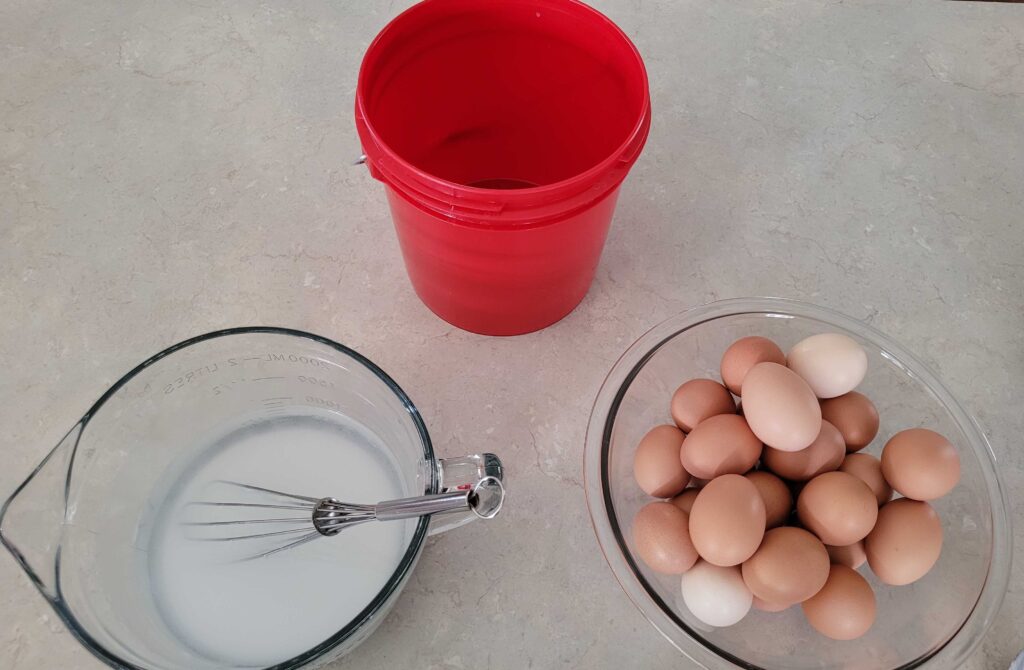
Learn how to preserve your bounty of fresh eggs easily and affordably with this simple method of water glassing that I use in my home.
If you raise chickens, you will have found that they don’t produce the same number of eggs throughout the year. It’s frustrating when you’re nestled indoors for the wintery months, ready to bake all of your family’s favorite treats, only to find that your chickens have went on strike and you don’t have enough eggs for all the extra baking. In the spring, my counter is overflowing with eggs to deal with. This is when I preserve that excess using my favorite method, water glassing, to make sure I’ve got plenty of eggs for all the winter treats.
Water glassing eggs is a simple and affordable method to store eggs that doesn’t require any complicated or expensive equipment. The taste and texture of these eggs is so close to a fresh egg that the difference was not detectable to my family of sensitive tasters. You can use water glassed eggs just as you would a fresh egg except if you are boiling your eggs.
Which Eggs to Use
The eggs used in this method need to be fresh and unwashed. Which means they must have the “bloom” on them intact. This is the protective layer that is on the egg when it’s laid by the chicken. Store bought eggs are washed and are often not very fresh, so they are unsuitable for water glassing.
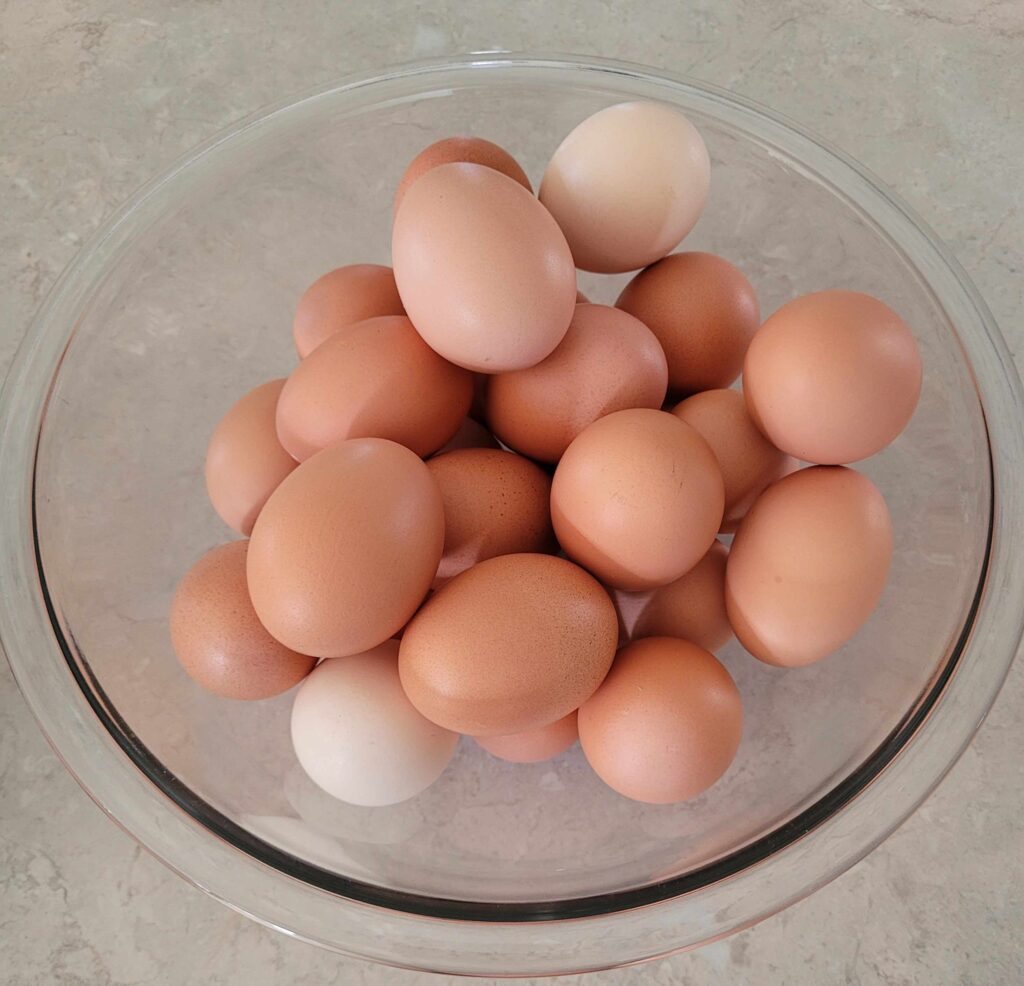
Also, you don’t want to use your fresh eggs that are really dirty. You know the ones that have mud or “other” smears on them. The very best bet is to use your clean, fresh laid eggs. I just wipe off any dust or debris, such as stuck on shavings, with a dry cloth.
Also make sure these eggs don’t have any cracks in the shell. If you’re concerned about the small cracks that are often difficult to see, I found that I’ll see them if I quickly candle the eggs with a flashlight. If you’re like me, you have kiddos that collect eggs and are not always super gentle with them.
Tools Needed
What supplies do I need to water glass eggs?
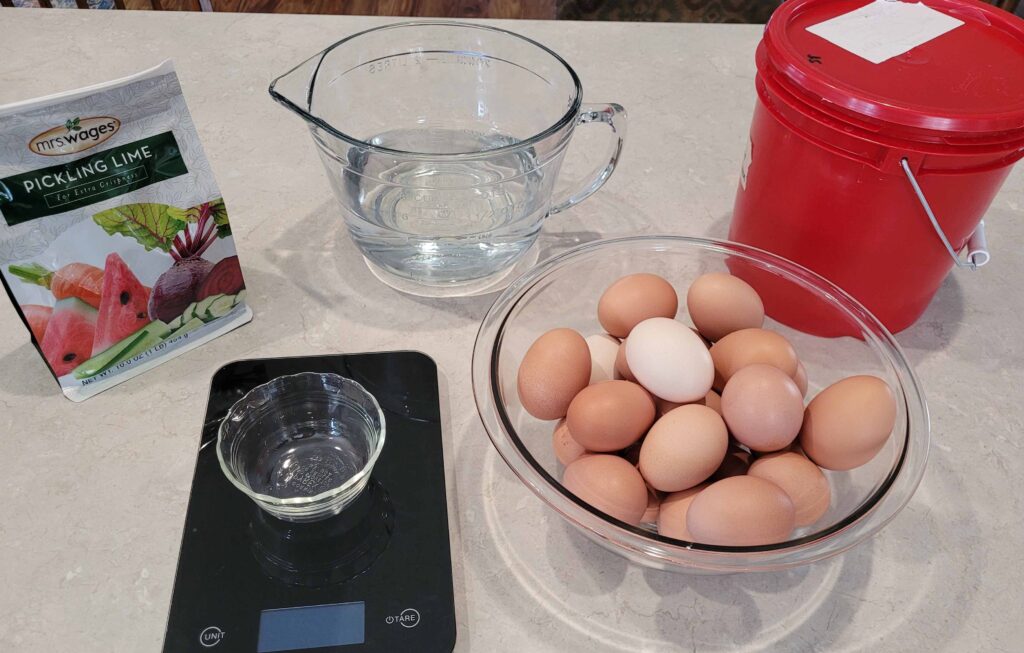
- a large measuring cup or pitcher to measure 1 quart of cool unchlorinated water
- a scale & small dish to measure 1 oz of pickling lime
- a food safe bucket, jar, or other container with a lid that the eggs and solution store in
- I use a one-gallon bucket that my raw honey comes in, but you can use a gallon ice cream bucket, gallon or half gallon jar. I find that the one-gallon bucket is easy to place the eggs into and get them out of and it holds 2-3 dozen eggs which is perfect for my family.
- Pickling Lime – usually found in the canning section of your grocery store or you can buy it here. Notice my bag is 16 oz. I use about 2 quarts of solution, sometimes a little more depending on my egg stacking ability, per 1 gallon bucket of eggs. So, this bag will do about 8 batches of 2-3 dozen eggs for me.
- Eggs – fresh and clean but unwashed eggs with no cracks will give the best results.
Steps
- Thoroughly mix 1 oz of lime into 1 quart of cool, unchlorinated water.
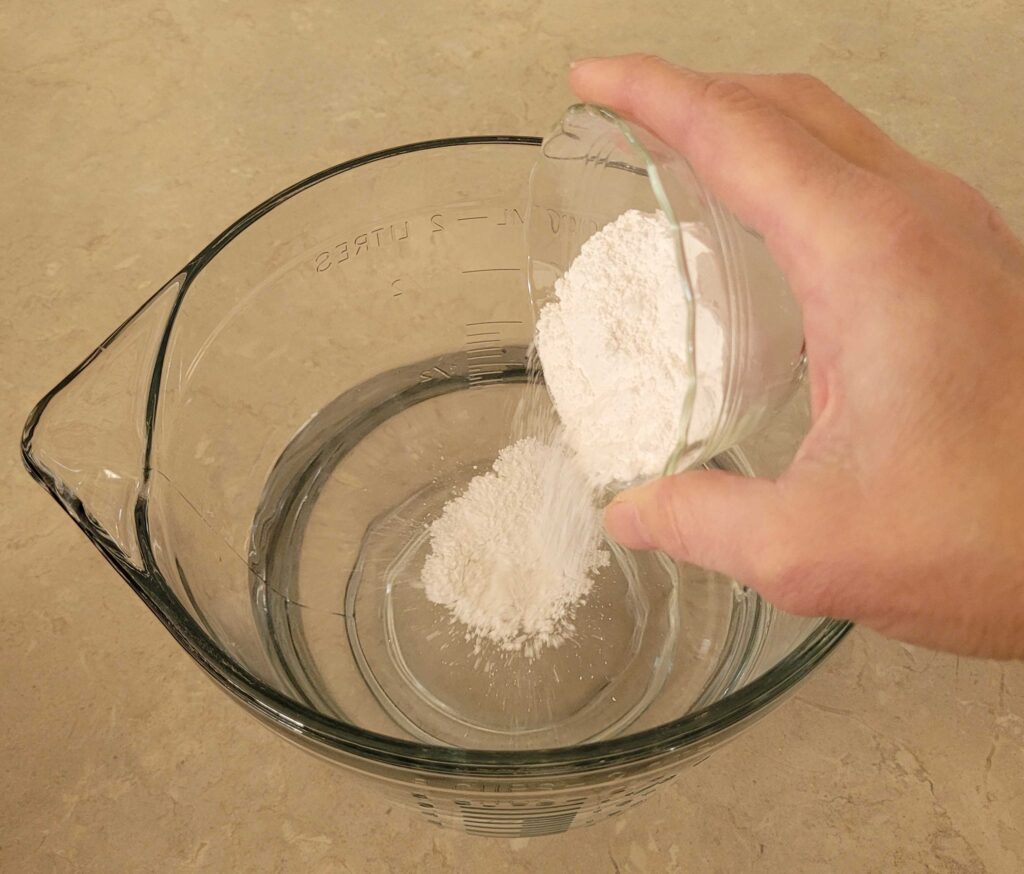
2. Place a couple layers of fresh, clean but unwashed eggs into your storage container. I always store my eggs with the pointed end down to keep the air cell from expanding.
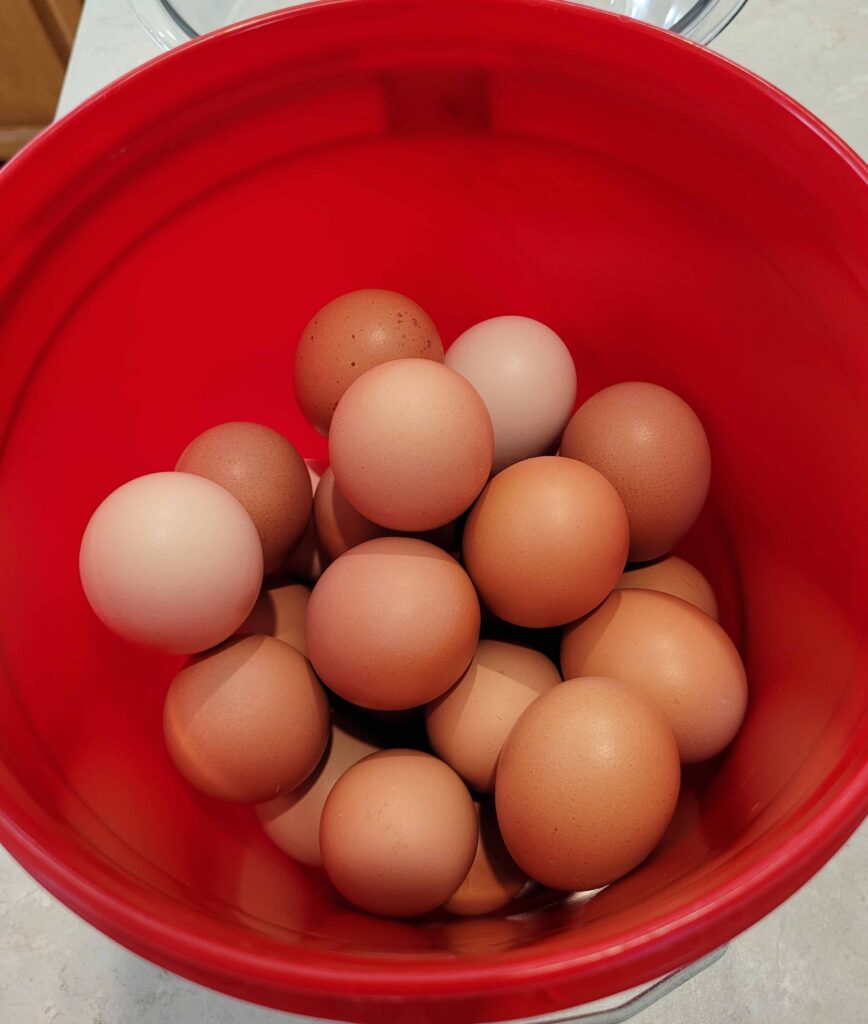
3. Pour the mixed lime solution over the eggs until they’re just covered. Then add another layer or two of eggs (however much space your container has) and pour more lime solution over. In the end, you want to have all the eggs submerged in solution completely. Don’t fill the bucket so full of eggs that they won’t be completely covered with solution.
4. Place the lid on the bucket and mark it with the contents and date.
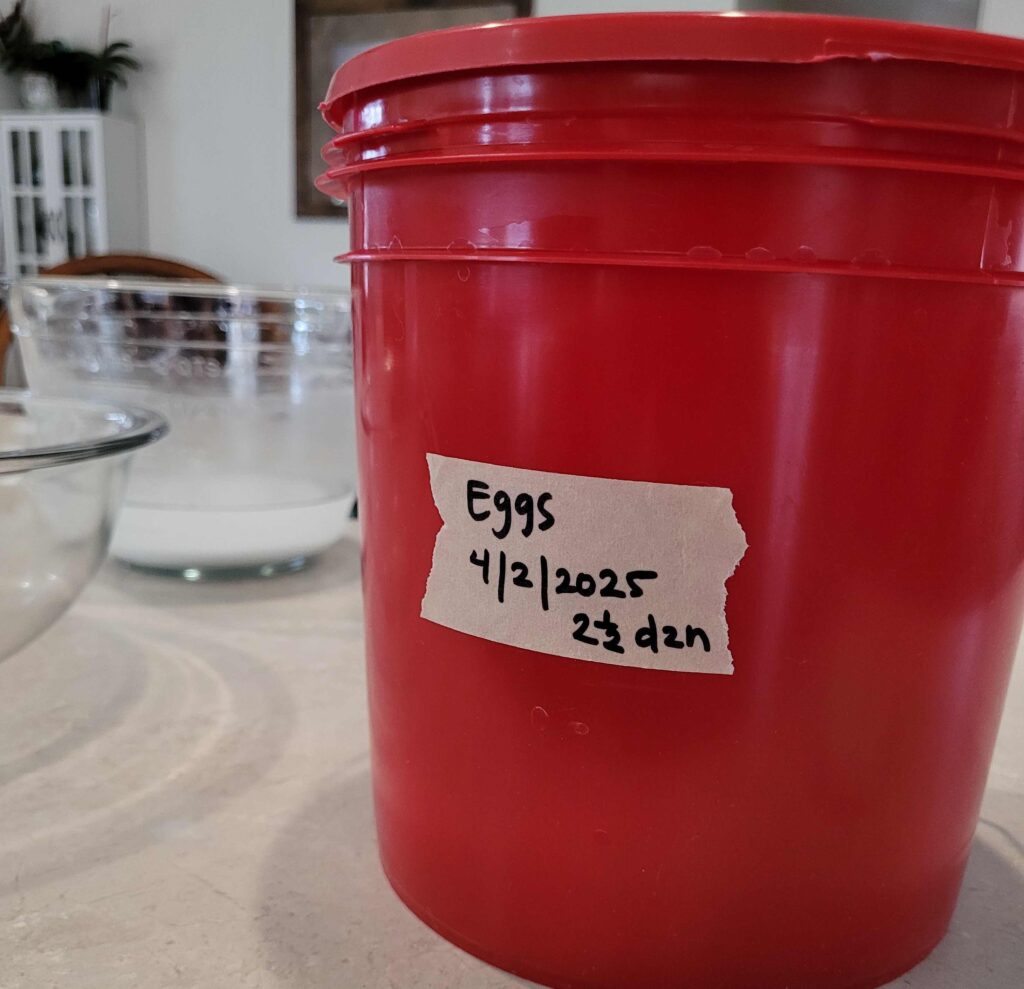
5. Store the bucket in a cool, dark place.
Storage
Storing your container of eggs is simple. Just make sure it’s in a cool, dark place without huge temperature swings. Similar to where you’d store your home canned goods, root vegetables and winter squash. I store mine in my insulated pumphouse alongside my home canned foods and potatoes and onions.
Water glassed eggs are safe to use for 1 year. Some people have used water glassed eggs that were stored for longer, but I prefer to use them within 1 year. If I have stored eggs left when it’s time to start storing new eggs in the spring, I’ll feed the old eggs to the pigs.
Using Stored Eggs
Water glassed eggs are easy to use. Just take the number you need out of the container and rinse them well. This is extremely convenient because you can use as many eggs as needed and just close the container until you need more.
You can use water glassed eggs just as you would a fresh egg except if you are boiling your eggs. Because the water glassing seals the shell completely, you’ll need to poke a hole in the shell before boiling to prevent exploding your hard-boiling eggs.
Important Tips
- If you only get a small number of extra eggs each day, you can do a small batch and just keep adding eggs and solution to your bucket until it’s full. Just make sure your eggs are covered with solution after each addition.
- Make sure egg shells are not cracked. If you’re concerned about small cracks in the shell, quickly candle your eggs with a flashlight before water glassing them.
- Rinse your eggs well to remove any remaining solution before use.
- If you’re going to boil a water glassed egg, first poke a small hole in the shell with a needle to prevent the egg from exploding while boiling.
- This method of water glassing uses calcium hydroxide, commonly known as pickling lime. There are other methods that use sodium silicate, but I prefer to use the pickling lime because it’s a more natural and less chemical option.
Water glassing eggs requires very little time and equipment and gives an excellent result. If you’re trying to be frugal with your time and money, this is an excellent way to assure that you have plenty of eggs for all your winter meals and treats.